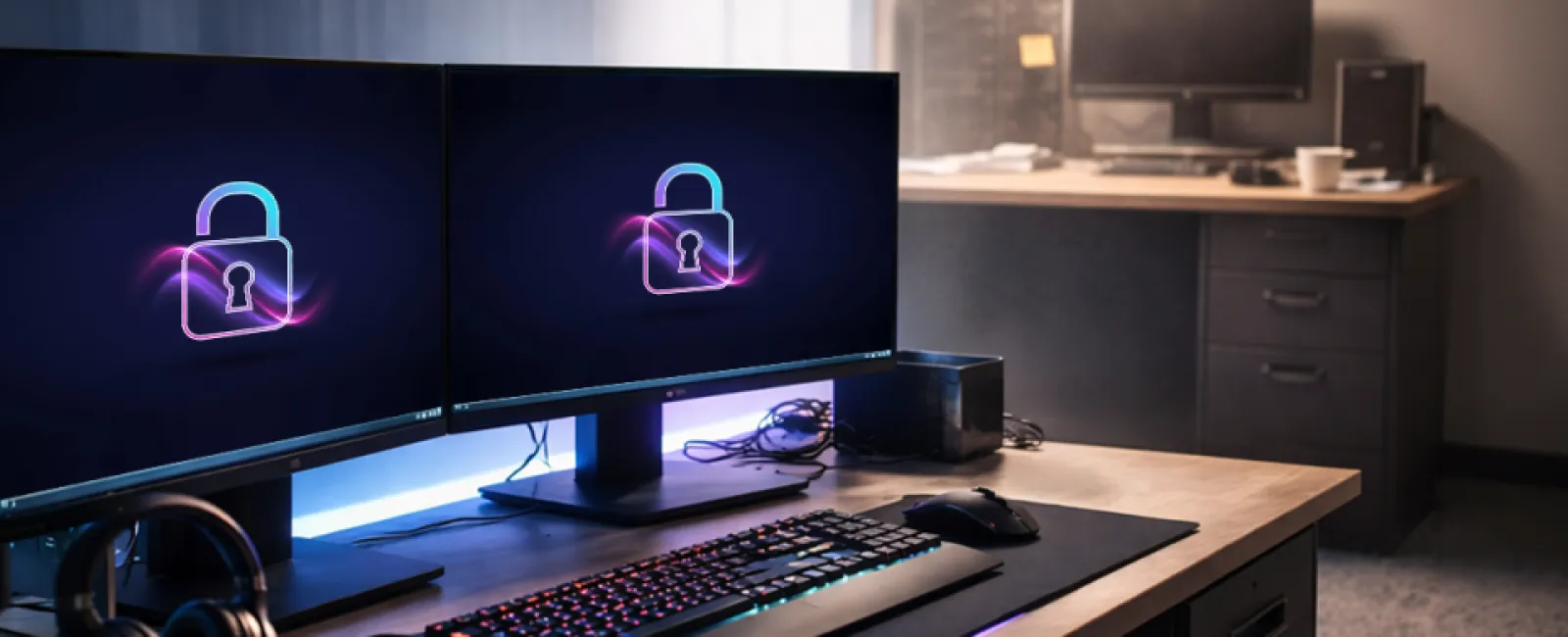
Remember when blowing into Nintendo cartridges was our makeshift tech support? That was how we fixed hardware glitches back in the day.
Cartridge won't boot? Blow gently. Still nothing? Blow with more force.
When that failed, the go-to fix was a firm smack on the console.
At the time, we thought we had technology all figured out.
But your child? They never had to resort to hitting devices. Their gaming station boasts a solid-state drive, 32GB of RAM, a processor powerful enough to render movies, mesh Wi-Fi eliminating dead zones, real-time system monitoring, and multi-factor authentication on every login.
Everything is fine-tuned, optimized, and meticulously maintained.
Now, reflect on your office setup.
There's a 2019 workstation that takes ages to start, a printer that jams like clockwork every Tuesday, shared folders named "New New Final FINAL," incompatible software platforms, Wi-Fi that fades out in the conference room, and a laptop nagging to update—a notice ignored daily for weeks.
Gamers upgrade constantly. Businesses settle for less.
This gap costs far more than most realize.
Why Gamers Stay Ahead
It's not a matter of budget. Gaming PCs and business workstations are similarly priced. Business internet plans often outpace residential ones in speed, and essential network monitoring and security tools are affordable.
The real difference is in the level of attention.
Gamers eagerly install updates—OS patches, GPU drivers, firmware upgrades, game patches—promptly. Delays cause lag, and lag means defeat. Your child updated their game at 11:30 PM on a school night just because they couldn't wait.
Meanwhile, those ignored updates on office devices expose your business to vulnerabilities already fixed by software providers.
Gamers religiously back up their progress. Lose a 200-hour save once, and that mistake is never repeated. Yet, about 68% of small businesses lack a documented disaster recovery plan. Losing data in business means losing vital records, financial history, and possibly your ability to operate.
Gamers constantly monitor performance—CPU temps, frame rates, network pings, disk usage. They detect even minor dips and troubleshoot before issues escalate. Most business owners only notice problems when someone complains about slow internet—that's reactive, not proactive.
Your child wouldn't tolerate such inefficiency, and their setup isn't paying salaries.
How Office Systems Get Messy
No one intentionally creates a tangled office IT network.
Business tech grows chaotically: a new tool here, accounting software there, CRM added, file sharing, payroll, then security patches stacked on top.
Each addition made sense initially, but over time technology stops being designed and starts accumulating friction.
Gaming rigs are built deliberately for peak performance. Most offices accumulate systems for convenience, resulting in inefficiency. One is strategy; the other, an accident leading to costly problems.
Back when we blew on cartridges, we didn't know better—but your business has no excuse. The tools and expertise exist; the difference is attention.
The Hidden Price Tag
The true cost isn't loud outages; it lives in daily little inefficiencies.
Five extra minutes logging in slowly, three minutes hunting for files saved incorrectly, redundant data entry, twice-weekly reboots, workarounds accepted as the status quo.
Seem small individually? UC Irvine found it takes 23 minutes to regain focus after interruptions. Those five-minute tech glitches actually cost nearly half an hour.
Spread this over your entire team, 5 days a week, year-round, and that's thousands of lost productivity hours invisible but costly.
Gamers reject lag absolutely. Businesses accept it daily. And that acceptance is the most expensive mistake of all.
The Smarter Question
Business owners often say, "It works fine" when describing their technology, but "working" and "working smartly" are very different.
Are your tools truly integrated or merely coexisting? Are your workflows streamlined, or just piled up? Does your tech support your processes or force you to work around it? Is anyone monitoring your network with a gamer's vigilance—proactively and constantly?
Hardware changes, but today's gains come from software, automation, security, and workflow design. None of these improve by themselves.
Quick Self-Check
Before moving on, consider:
· When was your oldest office computer purchased?
· Did your backups complete successfully last week?
· Is there a device on your network with an ignored update pending for more than a week?
· Can you tell your office internet speed without checking?
Your child could answer all these questions about their gaming setup instantly.
If you can't about your business systems, it's not failure—it just means no one's paying attention. And that's an easily fixable problem.
How We Help
We guide businesses from chaotic accumulation to streamlined optimization, stepping back to evaluate technology holistically—what's outdated, redundant, hindering, or ripe for automation.
Our focus? Not more technology, but better technology.
If you want to assess how your systems, software, and processes support productivity and profits—or where unseen costs lurk—we're here to discuss.
No buzzwords. No pressure. And maybe a few fewer gamer metaphors.
Click here or give us a call at 253-292-3329 to schedule your free 15-Minute Discovery Call.
If this resonated, feel free to share with another business owner who might be tolerating hidden lag.
In both business and gaming, performance truly matters.