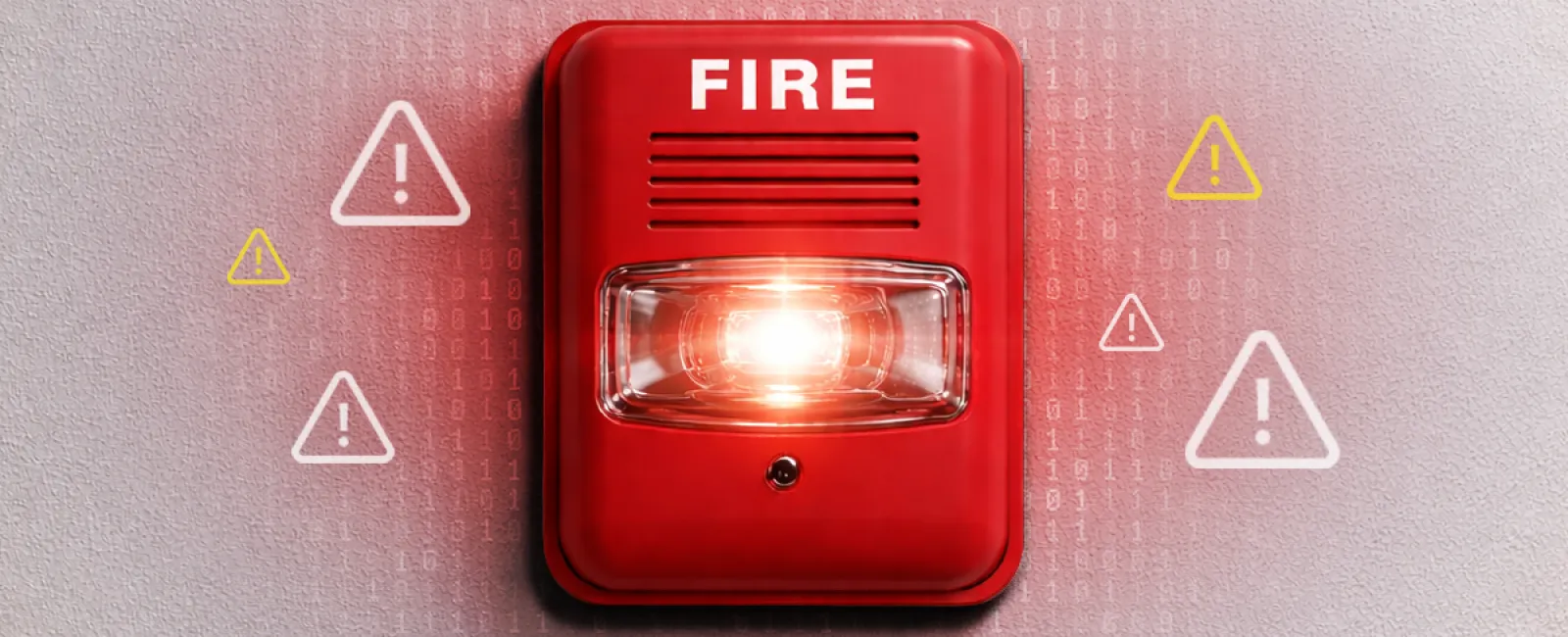
Waiting until IT breaks to take action may seem harmless in the short term.
Most problems begin quietly: a device runs a little slower, an alert appears, or something feels slightly off even though it still functions. Because there is no full outage yet, the issue gets pushed aside in favor of more immediate priorities.
Business keeps moving. Everything appears under control.
But minor issues rarely stay minor, and when they finally surface, they usually arrive in clusters.
That's when an ordinary workday turns into an urgent scramble. In summer, those disruptions can be even tougher to manage.
With key staff away and schedules less predictable, even routine problems take longer to pinpoint and resolve, slowing down more of your team in the process. What could have been fixed quietly behind the scenes becomes a company-wide interruption.
Here are a few of the most common ones we see:
1. The "it's just a little slow" system
It often begins with a system that is only slightly slower than normal.
Nothing completely fails, so no one raises a flag. People adapt by waiting a few extra seconds, refreshing pages, or trying again. Before long, the slowdown becomes part of the daily routine.
Then one day, it stops working entirely.
Now your team can't reach the tools they rely on, and productivity starts slipping. Employees begin troubleshooting on their own, rebooting devices, guessing at the cause, or creating temporary workarounds.
If the person who usually handles the issue is unavailable, it takes even longer to identify the root cause.
What could have been a fast repair when the problem first started now becomes downtime that affects the whole team.
2. The update that keeps getting postponed
There is always an update that needs attention.
But there is rarely a convenient time. Deadlines are looming, projects are in motion, or a higher-priority task takes over. The update gets moved to next week, then pushed again.
Because everything seems stable, it doesn't feel urgent.
Eventually, something changes. A system becomes incompatible, a known issue worsens, or a vulnerability stays exposed long enough to become a real threat.
At that point, a critical tool may not work properly, or it may fail altogether.
Instead of a controlled update, your team is dealing with an unexpected disruption. In the summer, when fewer people are available, recovery takes longer and the business impact grows.
3. The untested backup
Backups usually run quietly in the background, which makes them easy to overlook.
Maybe there was an alert at some point, or a notice that didn't seem urgent. Since nothing had failed yet, it was easy to assume everything was fine.
That assumption only lasts until something actually goes wrong.
When a file is lost, a system crashes, or data needs to be restored, the backup suddenly becomes critical. In that moment, you find out whether it truly works.
If the backup has not been running correctly, is incomplete, or was never tested, recovery becomes slower and more complicated than expected.
What should have been a quick restore turns into a larger disruption, with your team waiting to get back to work.
How proactive IT prevents this
The difference isn't luck; it's strategy.
Rather than waiting for something to fail, proactive IT focuses on finding and fixing issues early, before they impact your team.
That means performance concerns are addressed before they become outages, updates are completed on a regular schedule instead of being delayed, and backups are monitored and tested so they're ready when needed.
It won't prevent every issue, but it does stop small problems from growing into disruptions that throw your entire team off course.
What to do before the next issue becomes urgent
If you already have a few things lingering in the background, you're not the only one.
The challenge is that these issues often surface at the worst possible time, especially when your team is already stretched thin.
That's where we help.
As your IT partner, we keep small issues from turning into bigger ones by:
- Monitoring your systems so problems are caught early
- Managing updates and maintenance so nothing gets delayed indefinitely
- Making sure your backups are ready when you need them
- Providing your team with a fast, clear way to get help when something feels off
Instead of crossing your fingers and hoping things hold together, you know they're being handled.
Let's review what's been sitting on your list—and make sure it doesn't become your next fire drill.
Click here or give us a call at 253-292-3329 to schedule your free 15-Minute Discovery Call.
If this sounds like someone you know, pass it along. They may be closer to a fire drill than they realize.