Unforeseen events like power outages, cyberattacks, hardware malfunctions, and natural disasters can instantly disrupt small businesses, causing severe setbacks. Simply backing up your data isn't enough to guarantee smooth operations during a crisis. Without immediate access to systems, support for remote work, and clear communication with your team and clients, even brief interruptions can lead to prolonged challenges. Partnering with a dependable IT expert means preparing not just with backups, but with a comprehensive continuity strategy to keep your business thriving no matter what.
Backups Alone Won't Sustain Your Business — You Need a Robust Continuity Plan
While backups are a vital component, they represent only a fraction of an effective protection approach. What truly matters is a proactive business continuity plan designed to maintain your operations through any major disruption.
When systems fail, files become unreachable, or your physical office is compromised, relying solely on local backup files leaves you vulnerable. Without a clear, rapid recovery plan, you face significant risks including lost revenue, damaged reputation, and compliance issues.
Backups vs. Business Continuity: Understanding the Critical Difference
Many businesses mistakenly believe backups are sufficient:
● Backups restore your data.
● Continuity ensures your operations never stop, regardless of the challenge.
A solid continuity plan addresses essential questions such as:
● How quickly can we resume full operations?
● Where will our team work if our office is inaccessible?
● Which systems are vital and require prioritized recovery?
● Who manages the activation of our recovery protocols?
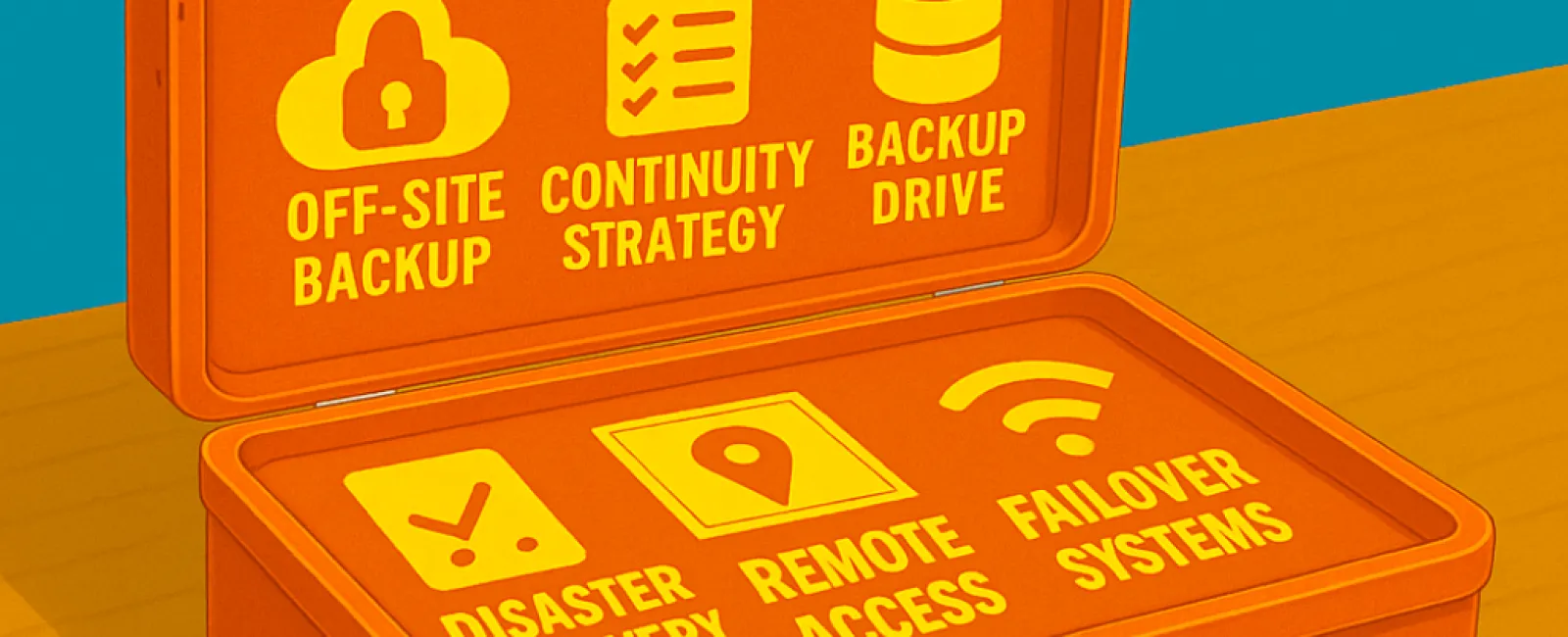
Key elements include:
● Encrypted, off-site, and immutable backups
● Prioritized recovery time and point objectives (RTO/RPO)
● Preparedness for seamless remote work
● Redundant infrastructure and failover systems
● Routine testing through disaster simulations
If your current IT provider can't confidently guide you through these critical areas, you're not secure—you're just fortunate so far.
Could This Happen to Your Business?
This isn't fear-mongering — these are undeniable examples of the real impacts disasters have had on businesses:
● Florida hurricanes have displaced hundreds of businesses, locking out those without cloud-based access.
● North Carolina flooding destroyed physical servers, wiping out months of crucial records and invoices.
● California wildfires reduced entire offices to ashes in the Pacific Palisades, many with no recovery safeguards.
● Numerous small businesses facing ransomware attacks discovered their backups were either corrupted or never tested.
Disasters don't discriminate—they affect businesses of all sizes every single day.
Essential Questions You Should Ask Today
If a disaster struck tomorrow, could your business keep running?
Speak with your IT team and ask:
● How swiftly can we recover from a ransomware incident?
● Are our backups consistently tested and comprehensive?
● What's the protocol if a flood or fire damages our office?
● Is our business continuity plan aligned with industry regulations?
● Can we maintain client services if our team must operate remotely?
If you hesitate on any of these answers, it's time to act before risk becomes reality.
Prepare for Disasters So Downtime Never Derails You
While you can't prevent every outage or attack, you can master your response.
A capable IT provider helps you bounce back.
An exceptional one guarantees your business never skips a beat.
Curious where your business stands?
Click Here or call us at 253-292-3329 to schedule your FREE 15-Minute Discovery Call—let's ensure a disaster never triggers costly downtime.